
What to Do With Repeat No-Show Clients: The "Same-Day Only" Flag
A fee stops most no-shows. It does not stop the client who has done it three times. Here is the strike ladder salons use, how the "same-day only" rule works, when to switch a client to prepay, when to stop booking them, and the texts to send at each step.

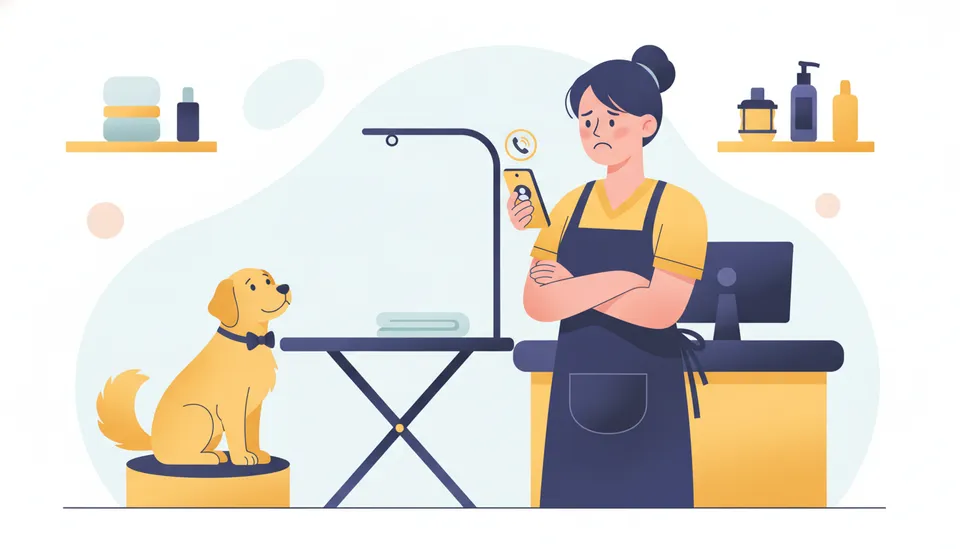
The one who begged for the slot
She rang twice on Monday and once on Tuesday. The dog was overdue, she was going away, could you possibly squeeze him in this week? You moved a nail trim, gave her Thursday at ten and felt good about it.
At 10:20 on Thursday you are standing next to an empty table. Voicemail. At four o’clock she texts, cheerful, asking whether next Tuesday works instead. It’s the third time this year.
One thread on r/doggrooming put it bluntly: the clients who beg hardest for an appointment are the ones who don’t turn up. Every groomer has a version of this client, and most have tried the obvious fix already: a grooming deposit or a card on file. That works on most people. It doesn’t work on the client who simply pays the fee and does it again, or on the one whose card fails, or on the one you never quite had the nerve to charge.
This post is about that last group: what to do on the second, third and fourth miss, and why the most useful tool is a rule some salons call same-day only.
Why the fee isn’t enough
A no-show fee turns a missed appointment into a price. For most clients, a price is a deterrent. For a few, it becomes a fair trade: they pay $40, you get nothing in return for a slot you could have sold for $90, and they book again next month as if nothing happened.
The money also understates the cost. As we worked out in the hidden cost of no-shows for a pet grooming business, a missed slot costs more than the groom. You lose the prep time, the client you turned away to make room, and in the case above, the nail trim you moved. A repeat no-show costs you all of that again, every time, and the fee only covers part of it.
So the fee stays, but you need a second tool. That tool controls access to the book, not money.
The strike ladder
Most salons that have dealt with this end up with something close to the ladder below. Our cancellation and no-show policy template has a short version. This is the full one, with what you say at each step.
| Strike | What changes | What the client can still do |
|---|---|---|
| First no-show | Fee charged (or waived once, and logged). A note goes on their record | Book normally |
| Second no-show | Fee charged. Deposit or card on file required before any future booking | Book ahead, with money down |
| Third no-show | Same-day only. No advance bookings | Call or text on the day and take any open slot |
| Any miss after that | Prepay in full for same-day slots, or stop booking them | Nothing, or full prepayment |
| Abuse at any point | Stop booking, whatever their attendance record | Nothing |
Three details make this work.
Late cancellations count, at half weight. A client who cancels with two hours’ notice every single time is not a no-show on paper, but your book can’t tell the difference. One salon described a client who cancelled at the last minute so reliably that every groomer in the building eventually refused to take her. Count two late cancellations as one strike and write that into the policy.
Strikes expire. A no-show from three years ago, followed by thirty clean visits, should not keep a client on same-day only. Pick a window, such as twelve months, and drop strikes that fall outside it. This keeps the ladder fair enough to defend.
The first rung can be kind. If you waive the first fee, say so (“I’ve waived it this time and made a note”), so the client knows a second miss will cost them. A waiver that is never mentioned teaches the client nothing.
How “same-day only” works
The idea is simple. A client on same-day only can’t reserve a future slot. They can still be groomed, but only if they contact you on the day and you have a gap: a cancellation, a dog that went home early, an hour you’d have spent cleaning.
It works for three reasons:
- You stop holding time for them. The only slots they can take are ones that were already empty. If they don’t turn up, you have lost nothing you could have sold.
- They aren’t banned. You don’t have to have a confrontation, and they can’t easily call it unfair in a review. They’re still a client, just without a reservation.
- It sorts people quickly. Clients who really want your groomer will start calling at 8am. The ones who were never committed will drift away, and you won’t have had to fire them.
Keep the rules tight:
- No “tentative” holds. “Can you just pencil me in for Friday in case?” is an advance booking. The answer is no.
- Same-day means the same day. If they text at 9pm asking about tomorrow, tell them to text again in the morning.
- Prepay at the point of booking, if they’ve missed since. A client who no-shows a same-day slot has used up the last of your goodwill.
- Set a way back. For example: three clean same-day visits, or six months with no misses, and they return to booking with a deposit. Without a way back, the rule feels like a punishment and clients argue with it.
That way back mirrors how groomers describe their whole approach: long-time, reliable clients get the “above and beyond” treatment because they’ve earned it, and everyone else gets the policy as written.
Close the “I thought I was booked” gap
A lot of repeat no-shows aren’t deliberate. They come from clients who never reply to anything. They don’t confirm, they don’t answer the reminder, and they assume the slot is theirs until someone tells them otherwise. Then they forget.
Groomers in the threads had a short answer for this: I don’t hold appointments. If a client on the second strike or above doesn’t confirm by a deadline, the slot is released. Put that in writing:
Appointments for clients with a deposit or same-day requirement must be confirmed by [6pm the day before]. Unconfirmed appointments are released to the waitlist.
One warning about how you collect confirmations. If your reminder asks clients to reply with a word, don’t make “cancel” one of the options. In many SMS systems that word unsubscribes the client from every message you send. You lose the appointment and the ability to remind them about the next one, which matters most for exactly this kind of client. Use a one-word reply for confirming, and make cancelling a phone call or a tap on a link. Your automated appointment reminders are where this gets set up.
Copy this: the texts for each strike
Send these the same day as the miss, while the facts are fresh and before the client has made up a story about it. Keep them flat: no apology and no lecture.
After the first no-show:
Hi [Name], we missed [Dog] at [time] today. Under our booking policy there’s a $[X] no-show fee, which we’ve charged to the card on file. Here’s our next availability if you’d like to rebook: [link]
After the second:
Hi [Name], we missed [Dog] again today, so the $[X] fee applies. From now on we’ll need a $[deposit] deposit to hold [Dog]‘s appointments. It comes off the groom on the day. Reply or call when you’d like to book.
After the third (moving to same-day only):
Hi [Name], this is the third missed appointment, so we can’t hold advance slots for [Dog] any more. You’re still welcome here: text us on the morning you’d like to come in and we’ll offer any open time that day. After [three] visits we can go back to booking ahead.
When they ask for a slot next week anyway:
“I’m sorry, I can only offer same-day times for [Dog] at the moment. If you message me on the morning, I’ll tell you what’s open.”
If they push: “It’s the same rule for everyone with three missed appointments. Message me Tuesday morning and I’ll see what I’ve got.” Then stop talking about it.
When to stop booking them
Same-day only handles most repeat offenders. A few need the last step. Stop booking a client when:
- They miss a same-day slot they asked for. They chose the time on the day and still didn’t come.
- They’re abusive to you or your staff about the policy. A client who yells over a $40 fee is showing you what the next five years will be like. Many salons end the relationship on the first occurrence, whatever the attendance record.
- The dog’s welfare is suffering. Clients who skip months often turn up with a matted dog and then argue about the dematting fee. One groomer described exactly that: a client who disappeared for months and then bargained over a $60 dematting charge. If the gaps are long enough to hurt the dog, irregular visits are a coat problem as well as a scheduling one. Our post on matted-dog pricing covers what that work should cost.
Ending it can be one line: “We’re not able to book [Dog] in future. I’ve attached [Dog]‘s grooming notes for whoever you go to next.” Don’t argue the history, and don’t offer a list of reasons the client can dispute. A longer guide to firing clients politely, with scripts for in person and by text, is coming.
The thin-book temptation
Expect this ladder to wobble in the slow months. When the book is half empty, putting a client on same-day only can feel like turning money away. It isn’t. Groomers report that no-shows spike in exactly those months, especially among clients who haven’t paid anything up front. A thin book is when an unreliable client costs you the most, because there’s no one waiting to take their slot. Getting through the grooming slow season covers the rest of what to do with those weeks.
A note for mobile groomers
In a van, a repeat no-show looks different: you drive there and nobody answers the door. The ladder is the same, but strike one costs more, because you’ve spent the drive and the gap in your route. It’s reasonable to require a card on file after the first time a client leaves you in a driveway.
Keep the strikes where the desk can see them
None of this works if the strike count lives in someone’s head. The person answering the phone on Saturday has to know, before saying yes, that this client is on same-day only. Otherwise the rule only applies on the days the owner is in.
In Packyard, a missed appointment is marked No Show on the appointment itself, so the client’s visit history shows every miss with its date. If the client has a card saved, you charge the no-show fee in the same step through Square. Add the current rung (“SAME-DAY ONLY since 10/28, 3 no-shows”) to the client notes, so anyone who opens the profile can see it. If you decide to stop booking a dog altogether, turn on Do Not Book on the pet’s card and enter the reason. The pet then won’t come up when anyone tries to book it.
Checklist: set up the repeat no-show rule
- Decide what counts as a strike (no-show = 1, late cancellation = ½) and how long a strike lasts.
- Write the ladder into your cancellation policy and service agreement.
- Add the confirmation deadline for clients on strike two or above.
- Check that “cancel” isn’t a reply word in your reminder texts.
- Save the four texts above as templates.
- Go back through the last six months of no-shows and put each client on the right rung, quietly.
- Agree who on the team can waive a strike. One person, not whoever picks up the phone.
- After three months, count how many same-day-only clients came back to booking ahead, and how many drifted away. Both are fine outcomes.
- Grooming deposits: how to charge them without losing clients
- Grooming cancellation and no-show policy template
- The 15-minute rule: a late arrival policy for your salon
- The hidden cost of no-shows for a pet grooming business
- Automated appointment reminders
Weekly, from Himani
The Saturday note
One idea a week for getting clients, keeping them and running the day. Short enough to read between dogs.
If you want the reminder texts, booking page and no-show rules in posts like this one to run on their own, that is what we built Packyard for. 30 days free.