· Packyard Team · Knowledge Base · 6 min read
How No-Shows Cost Pet Groomers $15K+ Per Year
No-shows cost groomers $6,000-20,000 yearly. Learn how to build a prevention system that stops them before they happen.
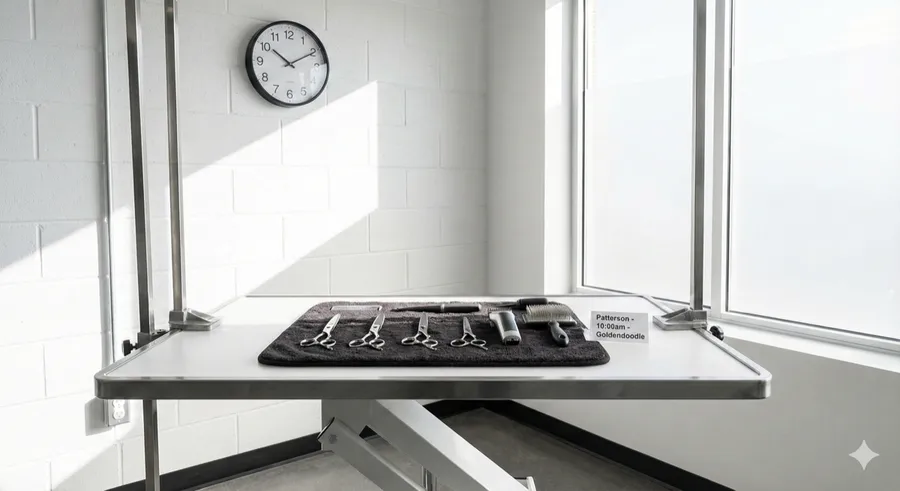
It’s 10am Tuesday. Mrs. Patterson’s Goldendoodle—90 minutes of scissor work you quoted at $95—was supposed to be on the table. The slot is empty. No call, no text. You’re staring at an hour and a half of unbillable time you can’t recover.
This isn’t just about the $95. It’s the client you turned away yesterday to hold that slot. It’s the cascade effect on your afternoon schedule. It’s the fifteenth time this has happened this quarter, and each one chips away at your business and your patience.
Most groomers accept no-shows as an unavoidable cost of the business. They’re not. No-shows are a systems problem, and systems problems have systems solutions.
Calculating the True No-Show Cost
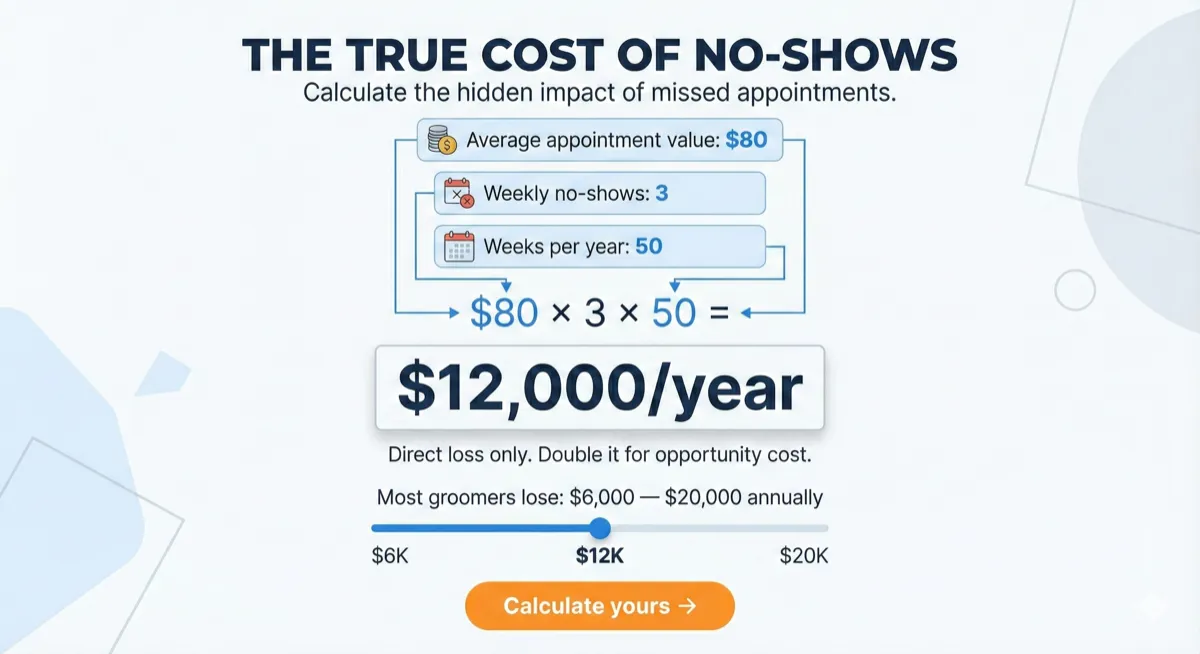
The direct math is painful enough. Average grooming appointment runs $60-100. At 2-4 no-shows weekly—typical for groomers without prevention systems—that’s $120-400 per week gone. Over a year: $6,000-20,000 in lost revenue.
But direct loss is only half the damage. Every no-show slot was a slot you refused to give someone else. When Mrs. Patterson booked that 10am Tuesday, you told another client that time wasn’t available. The no-show doesn’t just cost you one appointment—it costs you two.
Cascade effects multiply further. A 10am no-show doesn’t mean you start the 11:30am early. You wait. The gap can’t be filled on short notice. Your carefully constructed schedule develops a hole that throws off your entire day’s rhythm.
Then there’s operational overhead. Time spent calling, texting, documenting, rescheduling. Even a “resolved” no-show—one you eventually get back on the books—costs 15-20 minutes of admin work. Multiply that by 150+ annual no-shows and you’ve lost a full work week to damage control.
And the cost no spreadsheet captures is frustration. No-shows erode job satisfaction faster than difficult dogs or demanding clients. The unpredictability wears you down.
Why No-Shows Happen (And Why Policies Alone Don’t Fix Them)
Clients no-show for predictable reasons: forgot, overslept, pet got sick, schedule conflict emerged, found a cheaper option, felt anxious about the cost. Understanding the reasons matters less than understanding why your current approach isn’t preventing them.
What Most No-Show Advice Gets Wrong
The standard playbook fails groomers in three ways:
“Post your policy on your website.” Nobody reads it. Your no-show policy buried on a Terms page influences zero client behavior. Policies only work when they’re communicated at the moment of commitment—booking—not hidden in fine print.
“Send a reminder the day before.” One reminder isn’t a system. A single text 24 hours out catches some forgetters but misses clients who need more lead time to reschedule. By the time they see your reminder, it’s too late to fill the slot.
“Charge a no-show fee.” You can’t charge a card you don’t have. Most groomers collect payment at checkout, not booking. When a client no-shows, you have no payment method to charge. You’re left leaving voicemails about fees you can’t actually collect.
The enforcement gap is real: most groomers don’t charge no-show fees even when they have a stated policy. They fear confrontation, worry about losing the client, or simply lack the mechanism to process the charge.
No-show policies are reactive. They try to recover damage after it’s done. Prevention systems stop the damage from occurring.
The Four-Layer No-Show Prevention System
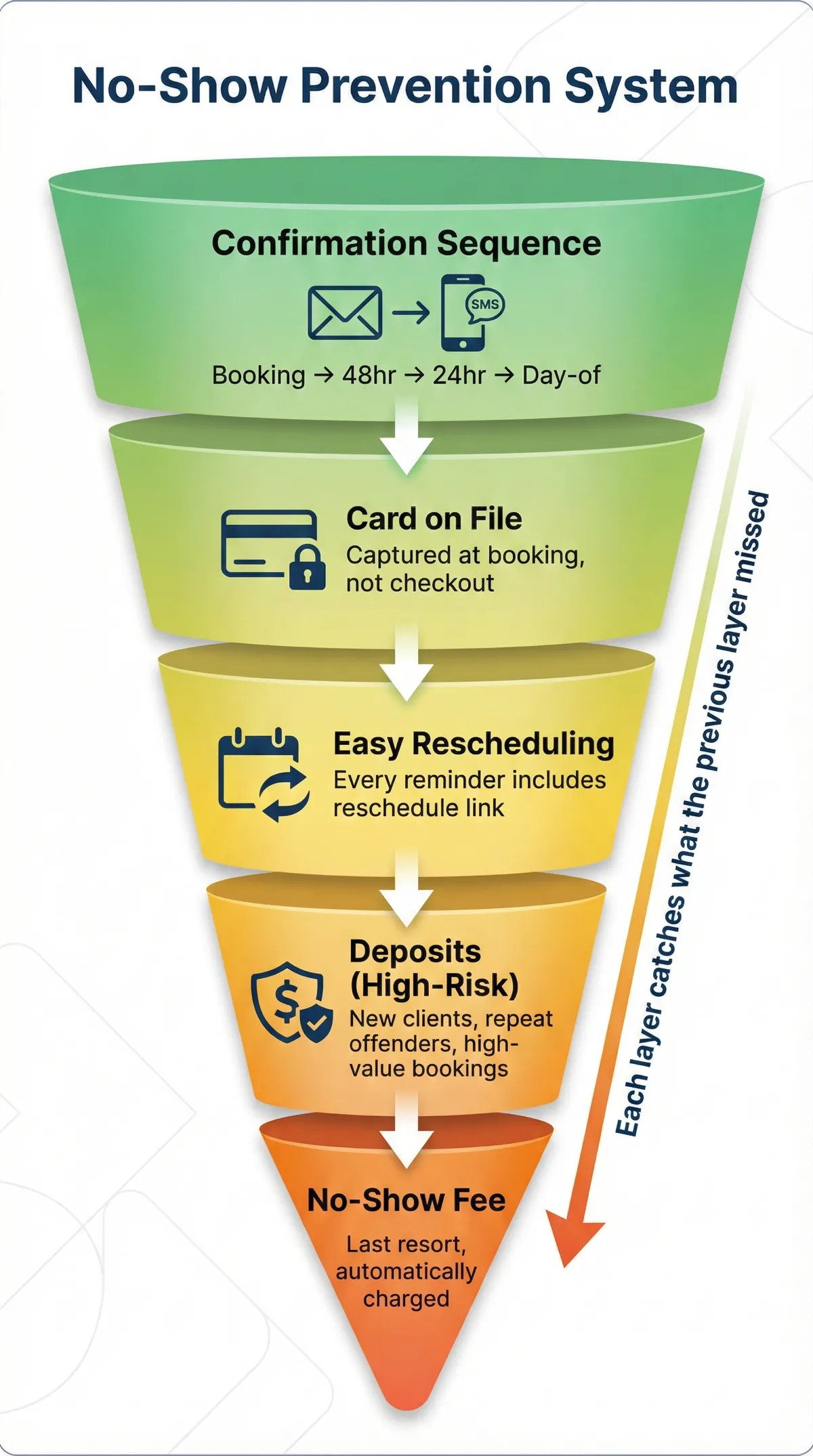
Effective no-show prevention isn’t one tactic—it’s layered defenses that catch different failure modes.
Layer 1: Confirmation Sequence
A single reminder isn’t enough. Build a communication sequence:
- Immediate confirmation after booking (SMS + email) — establishes the commitment
- 48-hour reminder — gives time to reschedule if conflicts emerge
- 24-hour reminder — final confirmation request
- Day-of reminder — morning of appointment
Each touchpoint reduces no-show probability. Groomers who implement multi-touch reminder sequences typically see no-shows drop by half or more compared to single-reminder approaches.
Layer 2: Card on File
Capture payment method at booking, not checkout. Clear communication removes friction: “Your card will only be charged for the service provided, or if you miss your appointment without 24-hour notice.”
Card on file closes the enforcement gap. Charging a no-show fee becomes automatic, not confrontational. You don’t have to chase clients or make uncomfortable phone calls—the system handles it.
This works best when your booking system and payment processor are natively integrated. No separate card capture flow, no manual reconciliation when fees are charged. One system, one transaction record. Learn more about why native Square integration matters for grooming software.
Layer 3: Easy Rescheduling
Every reminder should include a reschedule link. Make rescheduling easier than no-showing.
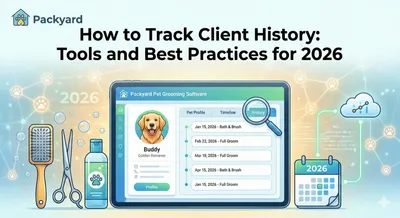
The psychology matters: clients who intend to no-show often feel guilty. A prominent “Need to reschedule?” button gives them a face-saving exit. A rescheduled appointment isn’t lost revenue—it’s recovered revenue. This rescheduling capability becomes even more valuable when combined with streamlined checkout workflows that reduce friction and make rebooking at pickup seamless.
Layer 4: Deposits for High-Risk Bookings
Not every appointment needs a deposit. But some should:
- New clients with no booking history
- Clients flagged for previous no-shows (your software should track this automatically)
- High-value appointments: multi-pet bookings, full groom packages, anything over $150
Deposits—refundable with 24-hour notice—filter out low-commitment bookings before they become no-shows.
Implementing No-Show Fees That Actually Work
When prevention fails, recovery matters. Here’s how to structure fees that actually get paid:
☐ Clear Fee Structure: 50% of service value or flat $50, whichever is greater. Communicated at booking, not buried in website fine print. Like matting fees, no-show fees require systematic collection—not awkward conversations after the fact.
☐ Automated Enforcement: Software charges the card on file automatically after your designated no-show window—configurable to your policy, typically 15-30 minutes past appointment time. No manual intervention required.
☐ Documentation Trail: System logs all reminders sent—timestamps, delivery confirmations. Essential for dispute protection if a client claims they weren’t notified.
☐ Exception Workflow: One-click waiver for legitimate emergencies. Pet illness, family emergency, genuine hardship. Maintaining relationships matters—the system should allow grace while preserving the policy as default.
☐ Repeat Offender Flagging: Software should automatically flag clients with no-show history. Require deposits from flagged clients proactively, before they no-show again. Client management systems that track booking history help you identify patterns before they become revenue losses.
☐ Vetted Software: Tools listed in official marketplaces like Square’s App Marketplace have been reviewed for payment compliance and security. Critical when you’re storing cards and processing fees automatically.
The goal isn’t to punish clients—it’s to create accountability that changes behavior. Groomers who implement full prevention systems typically report no-show rates dropping from 10-15% to 2-3%. On $150,000 annual revenue, that’s $12,000-18,000 in recovered capacity.
Take the Next Step
No-shows aren’t inevitable. They’re a systems failure you can fix.
See how automated reminder systems with card-on-file and deposit management stop no-shows before they happen, or explore complete grooming salon software that handles the entire prevention and recovery workflow automatically.
Start your free trial today and recover the $15K+ you’re losing to no-shows each year.