· Packyard Team · How-Tos · 11 min read
Grooming Deposits: How to Charge Them Without Losing Clients (or Getting Bad Reviews)
Most salon owners put off deposits because they are afraid of a one-star review. Here is who should pay one, how much, whether it is refundable, the exact wording, and how to roll it out in a month.
“They’re going to be pissed”
A groomer who had just taken over her own shop posted a question that almost every new salon owner eventually asks. She was about to start keeping a card on file and charging for late cancellations and no-shows, and she already knew how it was going to land. Her clients had never been asked for anything up front. Some of them had been coming to that chair for years. She expected, in her words, that they were going to be upset with her.
She was right, and she did it anyway, which is the correct answer.
The replies were full of groomers in the other position: employees who are not allowed to charge a no-show fee because the owner is afraid of a bad review, and who then eat the empty afternoon themselves. That fear is the single biggest reason salons stay unprotected. It is also mostly wrong, and this post is about why, and about exactly what to put in place instead.
If you want the arithmetic on what no-shows actually cost you first, we covered that in the hidden cost of no-shows for a pet grooming business. This post is the policy layer that sits on top of it.
Deposit, card on file, or prepay — pick the right tool
These three get used interchangeably and they are not the same thing. Choosing the wrong one is where most of the friction comes from.
| Tool | What happens | Best for | What it feels like to the client |
|---|---|---|---|
| Card on file | You store the card at booking and charge it only if the policy is broken | Established clients, the default for everyone once you are set up | Lightest. Nothing moves, nothing is paid |
| Deposit | A fixed amount is taken at booking and comes off the final bill | New clients, long grooms, holiday weeks, clients with a no-show history | Fair. They are paying toward the groom anyway |
| Prepay | The full price is paid before the appointment | Repeat offenders, and specialty work you can’t resell at short notice | Heaviest. Reserve it |
Card on file is the one most salons should start with, because it costs the client nothing and protects you against the same loss. The deposit exists for the cases where you need the client to have actually spent something before they decide whether to turn up.
Who should pay a deposit (not everybody)
The instinct when you finally get fed up is to apply the rule to the whole book on the same day. Don’t. You will spend a month on the phone with people who have never once let you down, and they are the ones who will remember it.
A reliable, long-standing client has earned the benefit of the doubt. Groomers describe this plainly: the above-and-beyond treatment, the squeezed-in Saturday slot, the fifteen minutes of grace, is something a client earns over time. Everybody else gets the written policy. That is not inconsistency, it is a loyalty program that costs you nothing.
Here is a tiering that holds up in practice.
| Client | What you ask for | Why |
|---|---|---|
| New client, first appointment | Deposit, or card on file plus a confirmation reply | You have no history at all. First-time bookings are where no-shows cluster |
| Established client, in regularly, never missed | Card on file | Costs them nothing. Still protects the slot |
| Any booking over 2 hours or over a set dollar value | Deposit | A 3-hour doodle slot you can’t refill is the most expensive slot you own |
| Holiday and peak weeks (December, spring break) | Deposit for everyone, no exceptions | You are turning people away for these slots |
| One no-call no-show on file | Deposit, non-refundable, going forward | A consequence, applied once, with a clear exit back to normal |
| Two or more no-shows | Prepay in full, or same-day booking only | At this point you are protecting the book, not the relationship |
The last row has its own rules worth reading separately.
How much
Keep it simple enough to say out loud without checking anything.
A flat deposit of $25–$30 works for most salons. It is enough that nobody forgets they paid it, and small enough that it does not feel like a hurdle at booking. Flat is better than a percentage because your front desk can quote it from memory, and because it does not punish the big-dog clients you most want to keep.
Or take 25–30% of the quoted service price. This is the better option if your price range is wide, say a $45 nail-and-tidy sitting in the same book as a $160 doodle. A quarter of the groom is enough to make a difference on the expensive slot.
For specialty work, take more. Hand-stripping, a four-hour creative groom, anything you blocked half a day for and can’t resell on a day’s notice: half up front is reasonable, and clients who book that work expect it.
Whatever you choose, the deposit should come off the bill, not sit on top of it. Say that in the same sentence as the number, every time. “It’s thirty dollars to hold the slot, and it comes off what you pay on the day.” Most objections die right there, because people hear “deposit” and brace for an extra charge.
Refundable or not
This is the part owners agonize over, and the answer is that both halves of it can be true at once.
The deposit is refundable if you cancel with [X] hours’ notice. It is forfeited if you don’t.
Pick your notice window and stick to it. Twenty-four hours is the common standard and the easiest to explain: it is enough time for you to offer the slot to someone else, which is the entire point. Forty-eight is defensible if you run a small book where refilling takes real effort. Anything longer starts to feel punitive for a dog haircut.
Three refinements worth building in from the start:
- Move it once, for free. A client who reschedules with proper notice keeps the deposit and it follows the appointment. This single rule removes most of the resentment, because it says the money is holding a slot rather than punishing them.
- Keep one genuine exception. A sick dog, a family emergency, a car accident. You will want to waive it occasionally, and having “at the salon’s discretion” written down means you can do that without the policy looking arbitrary. Log it in the client’s record when you do, so the next person at the desk knows it has already been used once.
- A forfeited deposit is not a punishment, it is partial payment for the hour. Say it that way to yourself and to staff. It changes how it gets communicated.
The wording
Short enough to fit on a booking page and in a text message. Fill in the brackets.
Booking and deposit policy
A $[30] deposit is required to hold your appointment. It comes off the price of your groom on the day.
Need to change your appointment? Just give us [24] hours’ notice and we’ll move your deposit to the new time, no charge.
Cancellations with less than [24] hours’ notice, and appointments nobody arrives for, forfeit the deposit. This covers the time we held for your dog and could not offer to anyone else.
If something genuinely goes wrong, call us. We’re reasonable people.
That last line does more work than the three above it. It tells the client the policy has a human behind it, which is what they actually want to know.
For the longer version covering fee tiers, notice windows and exceptions, see the full policy template.
Where the policy has to appear
A deposit policy that lives only on a laminated sign by the till is not a policy, it is decoration. It needs to be in front of the client at four separate moments:
- On the booking page, before they pick a time. Not in a link, not in a modal they can dismiss. In the flow.
- In the confirmation message, in one line. “Your $30 deposit is paid and comes off the total.”
- In the service agreement they sign at intake. Salons that have been through a dispute re-sign this every couple of years as the policy changes. If you don’t have one, what a good pet service agreement looks like covers the rest of the document.
- In the reminder text, where the cancellation window is named. Your automated appointment reminders are the last chance to convert a no-show into a cancellation with notice, which is the outcome you actually want.
One warning from groomers who have been burned by the reply-to-text setup: a client who types “cancel” at a confirmation message may be unsubscribing themselves from all of your SMS rather than cancelling the appointment. Word the reply instructions so that cancelling is a phone call or a tap on a link, and reserve the one-word reply for confirming.
Handling the bad-review fear
The fear is real and the risk is smaller than it feels. Bad reviews come from surprise, not from policy. Nobody writes a one-star review because a salon asked for a deposit at booking. They write one because they were charged $30 they did not know about, by a business that never told them, after a conversation where someone was short with them.
So the whole job is removing the surprise:
- Announce it before it applies. Thirty days, to everyone, by text and at the desk. The groom that is already on the book is under the old rules.
- Grandfather nobody into confusion. If regulars are exempt from the deposit, tell them so explicitly. “Nothing changes for you” is a nice message to receive.
- Make the front desk script short and uninflected. “We take a thirty-dollar deposit to book, and it comes off the groom.” No apology, no explanation, no “I’m so sorry but.” The apology is what signals that the policy is negotiable.
- Have one answer ready for the pushback. “I understand. It’s the same for everyone now, and it goes straight onto your groom. Shall I put you down for Thursday at ten?” Then move to the booking question. Most people follow you there.
- Expect to lose one or two. The clients who leave over a $30 deposit are, reliably, the clients who were going to no-show you in February. Groomers who have raised their standards describe the same pattern every time: the hagglers and the no-shows filter themselves out, and the book gets easier.
And if a review does land, answer it once, publicly, calmly, with the policy stated in a sentence. Future clients read the reply more carefully than the complaint.
Deposits are slow-season insurance
The month you most need deposits is the month you are least likely to introduce them. When the book is thin, a client who would never dream of dropping a December appointment will cancel a quiet Tuesday without thinking, because they can tell you are not busy. That is exactly when owners get nervous about asking for anything up front.
Set the rule in your busy stretch, when turning someone away costs you nothing, so that it is already normal by the time things go quiet. Our guide to the grooming slow season covers the rest of what to do with those months.
Where the deposit should live
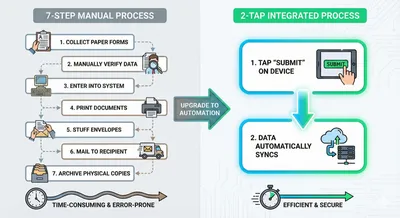
A deposit policy only works if taking the deposit is faster than not taking it. If someone has to remember to ask, remember the amount, run a separate payment, write it on a sticky note and then remember to subtract it at checkout, it will quietly stop happening by week three.
Packyard takes the deposit at the moment of booking through Square, attaches it to the appointment, and subtracts it automatically when you check the dog out, so the amount on the terminal is already correct. The card stays on file against the client record, the policy text sits on the booking page and in the confirmation, and a client with a no-show on their file can be set to deposit-required or prepay-only without anyone at the desk having to remember who is who. Because the payments are native to Square rather than bolted on, the deposit and the final payment land in the same place and reconcile at end of day.
If you are still running the book on paper or in a messaging app, deposits are one of the two features that make the switch worth it on day one — the other is notes. Moving from a paper book to online booking walks through that migration in a weekend.
A one-month rollout
- Week 1. Decide three numbers: the deposit amount, the notice window, and who is exempt. Write them down.
- Week 1. Paste the policy wording into your booking page, confirmation message and service agreement.
- Week 2. Send the announcement text to the whole list with the start date. Tell loyal clients what does not change for them.
- Week 2. Run the front-desk script past whoever answers the phone until they can say it flat.
- Week 3. Take deposits on new bookings only. Existing appointments stay under the old rules.
- Week 4. Policy applies to everything. Enforce the first forfeited deposit exactly as written — the first one sets the precedent for the whole year.
- Month 2. Pull your no-show count and compare it to the three months before. This is the number that tells you whether to tighten or relax.