· Knowledge Base · 7 min read
What Does a Good Pet Service Agreement Look Like?
What to include in a pet service agreement to protect against no-shows, disputes, and liability. Covers key clauses and templates.
A client drops off their senior dog for a full groom. Two hours later, they pick up and notice a small nick on the ear. They’re upset. You explain the dog was squirming during the process, but there’s nothing in writing. No signed acknowledgment that grooming elderly pets carries inherent risk. No documentation that the client understood the terms before you ever picked up the shears.
Now you’re stuck in a he-said-she-said situation that could cost you a client, a negative review, or worse.
This scenario plays out at grooming salons, daycares, and boarding facilities every week. The fix is straightforward: a written service agreement, signed by the client before services begin.
Why Every Pet Service Business Needs a Service Agreement
A service agreement is not just a legal formality. It is one of the most practical tools a pet service business can adopt. Here is what it does for you:
- Sets expectations upfront. Clients know exactly what they are agreeing to before you touch their pet. No surprises about pricing, policies, or procedures.
- Protects your revenue. Cancellation fees, no-show charges, and late pickup fees only hold weight when a client has acknowledged them in writing.
- Reduces disputes. When a disagreement arises, you can point to a signed document rather than relying on verbal recollections.
- Limits liability. Pre-existing health conditions, matted coats, vaccination requirements, and emergency protocols are all documented, reducing your exposure.
- Builds professionalism. Clients take your business more seriously when you operate with clear, written policies. It signals that you run a real operation, not a side hustle.
What Does a Good Service Agreement Include?
A solid pet service agreement covers every scenario where misunderstandings typically arise. Below is a breakdown of each section and why it matters.
1. Pet Acceptance Conditions
This section establishes the baseline requirements a pet must meet before you provide service.
- The pet must be in good general health. Grooming elderly, ill, or infirm pets is done at the owner’s sole risk.
- Rabies vaccination must be current as required by applicable law, unless otherwise discussed and documented.
- Pets with expired vaccinations or behavioral issues that pose safety concerns may forfeit their appointment and incur a cancellation fee.
Why it matters: This protects you from liability if a pre-existing condition is discovered or worsened during grooming. It also gives you grounds to refuse service on safety concerns without it becoming a confrontation.
2. Services and Pricing
Transparency about what is included in a standard groom and what costs extra prevents billing disputes.
- Pricing is based on pet size, coat condition, and service duration.
- Standard grooming includes nail trimming, ear cleaning, and anal gland expression unless the procedure poses risk to the pet or groomer.
- De-matting or complete coat removal may dramatically alter appearance and may expose underlying skin conditions. The groomer is not liable for such conditions.
- If fleas are discovered during grooming, an additional fee applies for specialized treatment and facility sanitation.
Why it matters: Clients often expect a specific look or price without understanding how coat condition affects the outcome and the cost. This section manages those expectations before the appointment starts.
3. Payment Terms
Keep this simple and clear.
- Payment is due at time of service.
- Accepted methods: cash, credit card, or other payment methods as specified.
Why it matters: Eliminates ambiguity about when and how you get paid. No chasing clients for payment after the fact.
4. Pickup Policy
Late pickups tie up kennel space, disrupt your schedule, and create stress for the pet.
- Pet must be picked up within 30 minutes of ready notification.
- A fee per hour applies thereafter unless prior arrangements are made.
Why it matters: Without this, clients treat your salon as free daycare after the groom. A written late fee policy gives you the backing to enforce it.
5. Satisfaction Guarantee
Offering a touch-up window shows confidence in your work and gives clients a path to resolve concerns without escalating to a negative review.
- Touch-ups for length or style concerns are provided free of charge within a set number of days of the original appointment.
Why it matters: This turns a potential complaint into a return visit. It also sets boundaries: you will fix legitimate style concerns, but the window is limited.
6. Health and Safety
This section covers situations that arise during the grooming process itself.
- If a tick is found, the groomer will attempt to preserve it for veterinary follow-up.
- Clients should inspect pets for fleas before appointments to avoid additional charges and protect other animals at the facility.
Why it matters: It establishes shared responsibility. The client has a role in ensuring their pet arrives flea-free. You have a protocol for ticks. Everyone knows the plan.
7. Cancellation Policy
No-shows and last-minute cancellations are one of the biggest revenue drains in pet services. A cancellation policy only works if the client agreed to it in advance.
- Cancellations or reschedules require a set number of hours advance notice to avoid fees.
- A late cancellation fee per pet applies for cancellations within the notice period.
- Exceptions for inclement weather, family emergencies, or other uncontrollable circumstances may be considered at the groomer’s discretion.
Why it matters: This is where the signed agreement pays for itself. You cannot charge a cancellation fee with credibility unless the client acknowledged the policy beforehand.
8. Late Arrival Policy
Late arrivals throw off your entire day, especially if you are running back-to-back appointments.
- A grace period from the scheduled appointment time is defined.
- Arrivals beyond the grace period may incur additional time charges or appointment refusal with a no-show fee, depending on the day’s schedule.
Why it matters: It gives you a professional framework to turn away a client who shows up 30 minutes late without it feeling personal.
9. No-Show Policy
A no-show is a client who simply does not appear and gives no advance notice.
- No-shows may be charged the full grooming fee due to lost revenue.
Why it matters: An empty slot is lost income. If a client has signed an agreement acknowledging the no-show fee, you have justification to charge their card on file or enforce the policy on their next visit.
10. Emergency Authorization
This is a critical section that many agreements miss.
- In the event of a medical emergency during grooming, the client authorizes the groomer to contact the nearest veterinarian and approve necessary treatment at the client’s expense.
Why it matters: If something goes wrong, you need pre-authorization to act quickly. Without it, you are stuck waiting for a client who may not answer the phone while a pet needs immediate care.
11. Right to Refuse Service
You need the contractual right to decline service without it becoming a legal issue.
- The groomer reserves the right to refuse service to any pet or client and to cancel or reschedule appointments when deemed necessary.
Why it matters: Aggressive pets, uncooperative clients, unsafe situations. You need the ability to say no and have it backed by a signed document.
12. Acknowledgment and Signature
The final piece that ties everything together.
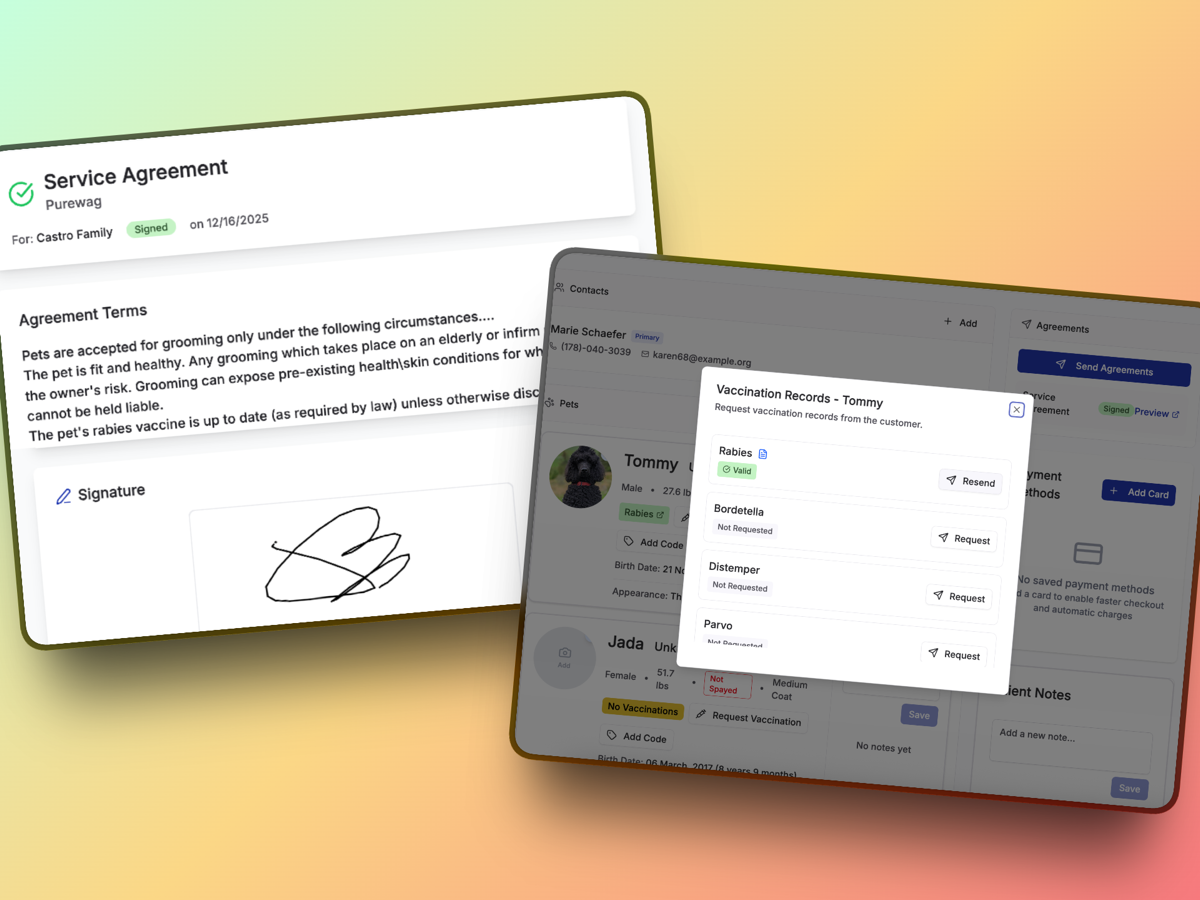
- The client signs confirming they have read, understand, and agree to the terms.
Why it matters: Without a signature, the agreement is just a piece of paper. The signature is what makes it enforceable and demonstrates mutual understanding.
The Benefits Add Up
When you put all of these sections together, a signed service agreement gives your business:
- Revenue protection from cancellations, no-shows, and late pickups
- Liability coverage for pre-existing conditions, emergency situations, and grooming outcomes
- Client trust through transparency and professionalism
- Dispute resolution backed by a documented, signed commitment
- Operational consistency so every client is treated with the same clear set of expectations
The businesses that run into the fewest client disputes are not the ones with the fewest problems. They are the ones that addressed those problems proactively, in writing, before the first appointment.
Download the Free Template
We have put together a pet service agreement template that covers all of the sections outlined above. It includes fill-in-the-blank fields for your specific fees, time windows, and business details.
Download the Pet Service Agreement Template (.docx)
Customize it for your business, print it out, and have every client sign before their first appointment.
Running a pet service business means juggling appointments, client records, pet notes, and payments all at once. Packyard brings it all together in one place so you can focus on the pets, not the paperwork. See how it works.